Arrival
A traveller is moving toward the platform without knowing whether the metro is waiting, arriving, leaving, or already gone. At a certain point, this uncertainty is resolved.
The work begins at that point. When the first group reaches the corner or the platform approach, they receive direct knowledge of the situation. The metro may be standing there, with doors that could close at any moment. It may be pulling in. It may have just left. Each state produces a different change in the group.
If the metro has just gone, the urgency drops. The first group relaxes, slows down, or releases the last push toward the platform. That change becomes visible to people behind them. They may still be too far back to see the platform themselves, but the pressure in front of them has already changed.
If the metro is standing at the platform, the opposite can happen. The first group accelerates, because they do not know how long it has already been there. The doors might close at any moment. That acceleration also travels backwards. People further away begin to respond to the increased urgency before they have any direct knowledge of the train.
Arrival follows this chain reaction. The first group reacts to the platform. The next group reacts to the first group. Further back, people react to changes whose cause they still cannot see. The metro becomes visible first as a change in the crowd.
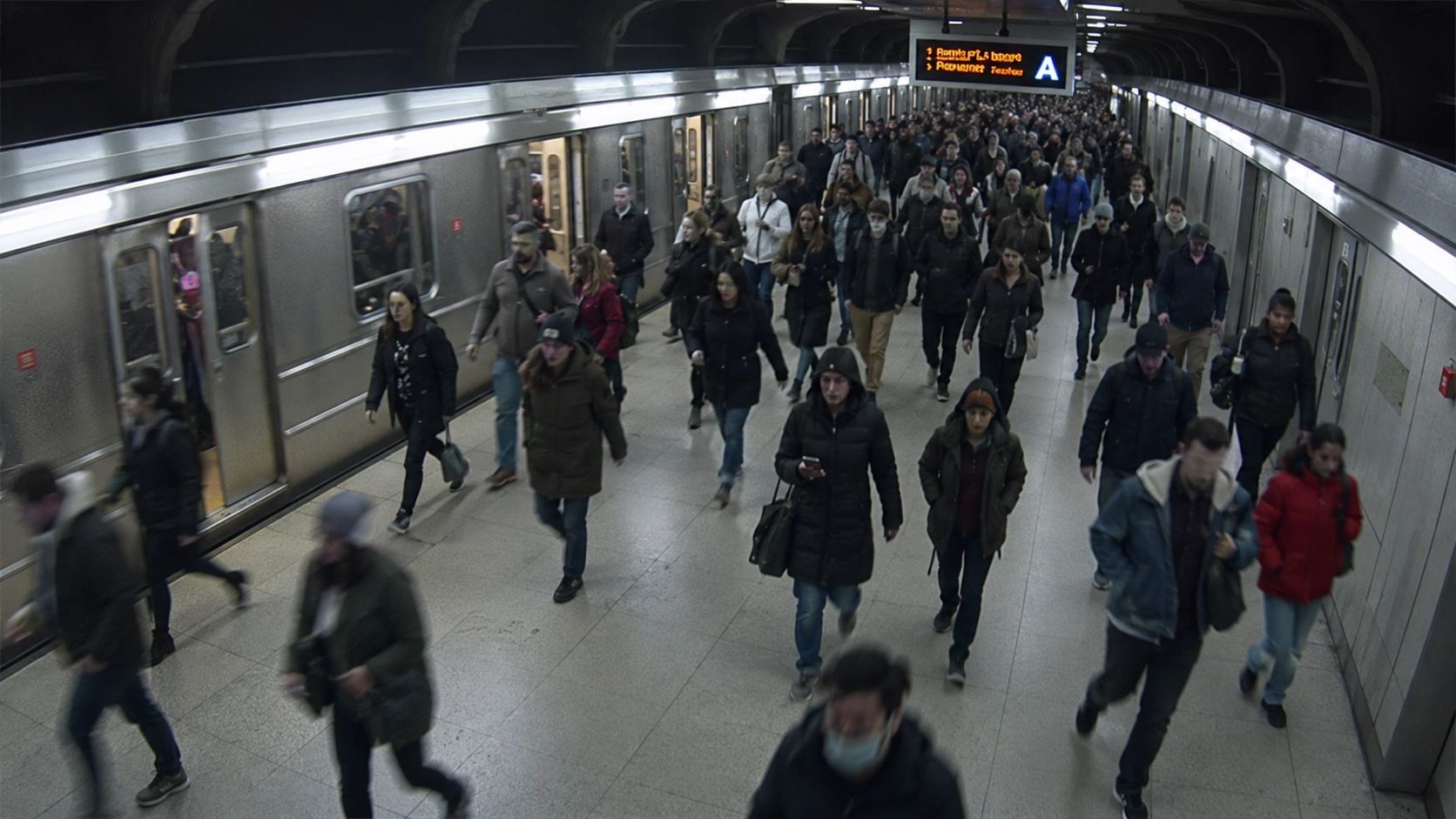
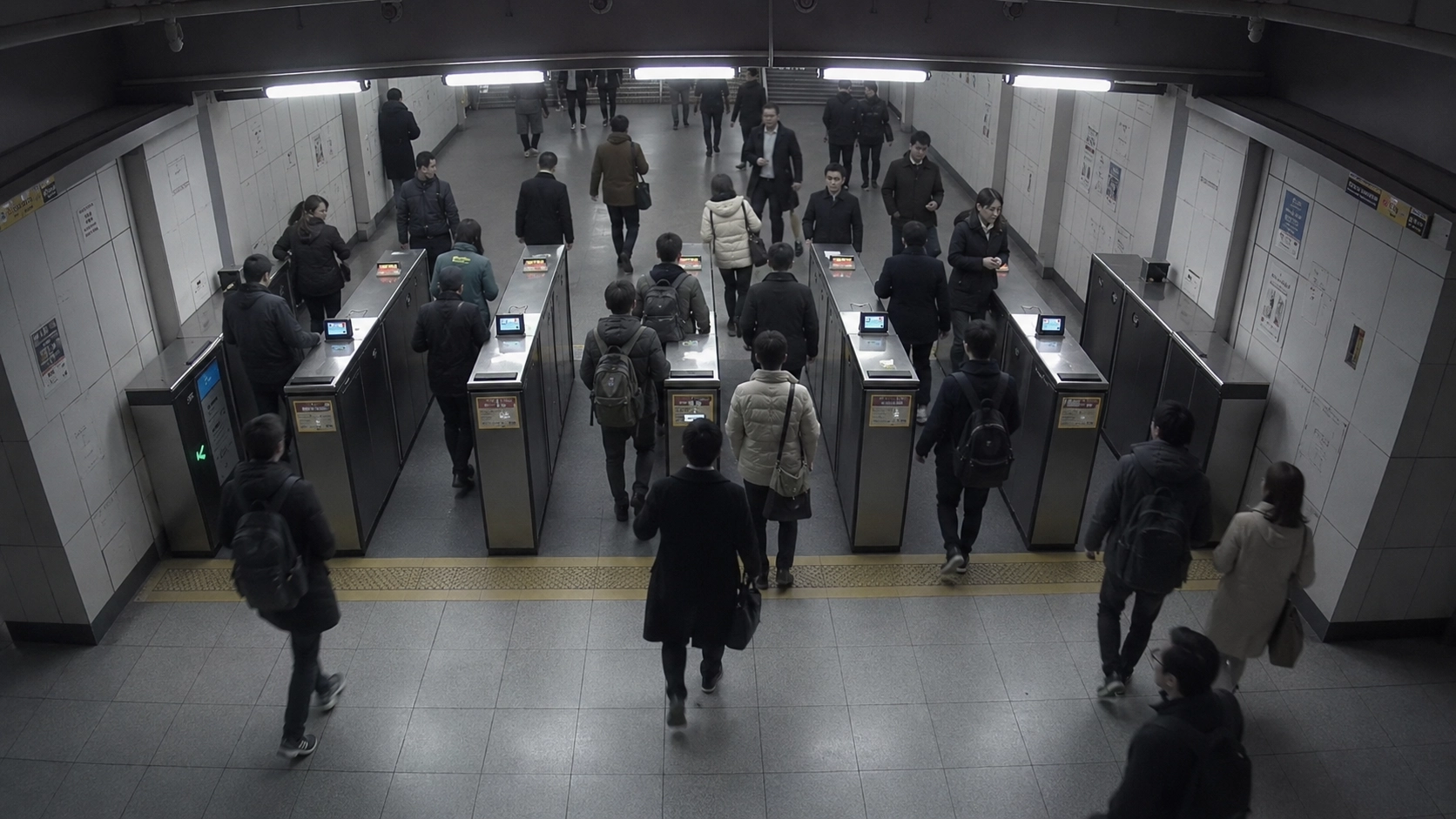
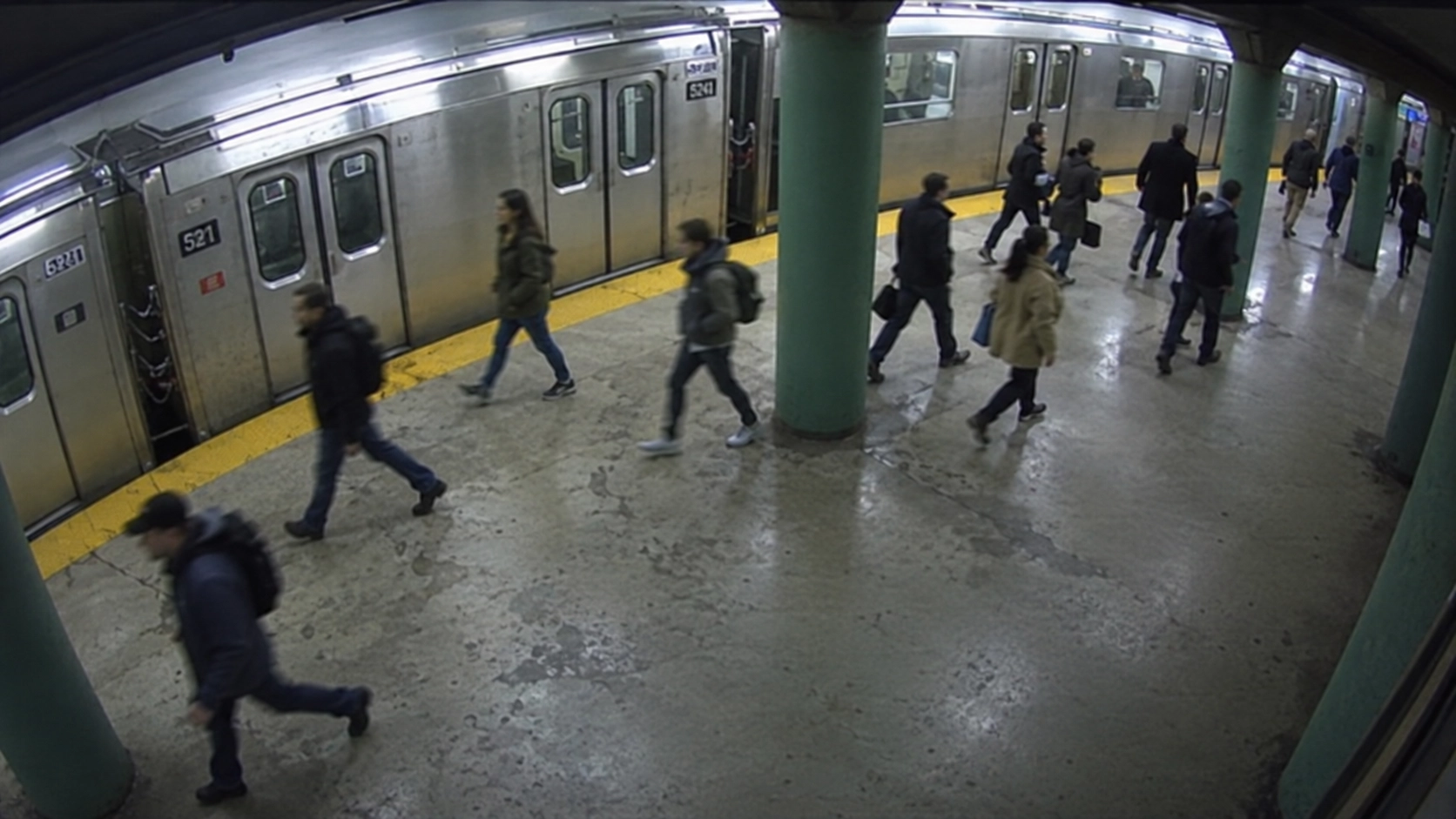
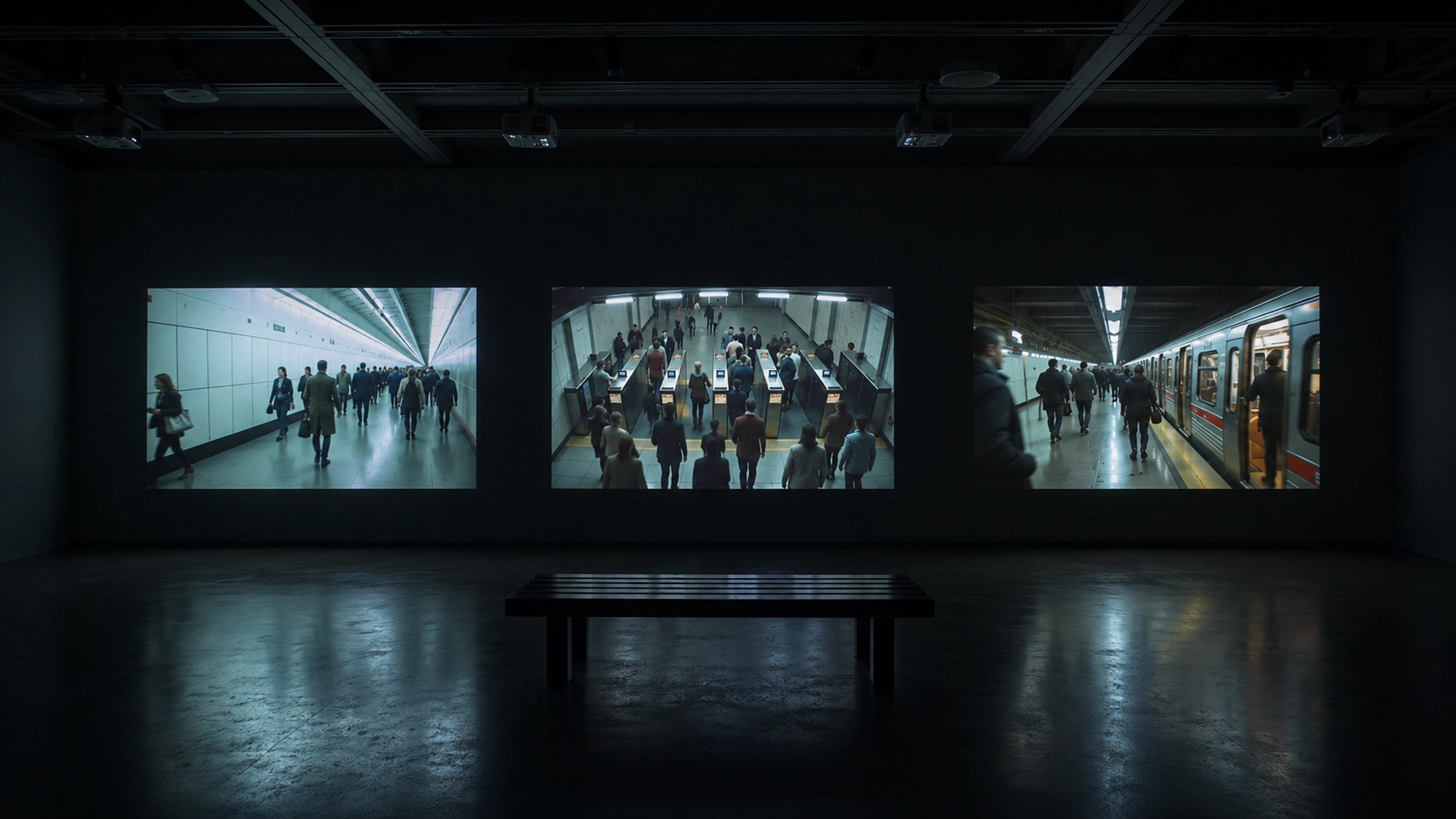
The installation gives the viewer a position no passenger has. From several synchronised camera angles, the viewer sees the platform, the corner, the hall and the rear parts of the station at the same time. The viewer can see whether the metro is there, leaving, arriving, or gone, while also watching people who do not yet have access to that knowledge.
Arrival asks how far a fact can travel through a group before the fact itself is seen.
method
The station is filmed from multiple fixed viewpoints at the same time: ticket gates, hall, corridor, corner and platform. These views are shown in synchrony, allowing one metro arrival or departure to be followed across several positions at once.
The installation compares the actual state of the metro with the changing pace, spacing and direction of passengers who are still outside the direct visual field of the platform.
output
- multi-channel video installation
- synchronised station viewpoints
- movement and crowd sequence study
- public space research material