Tractatus Drift
Tractatus Drift starts with a text that tries to make language behave.
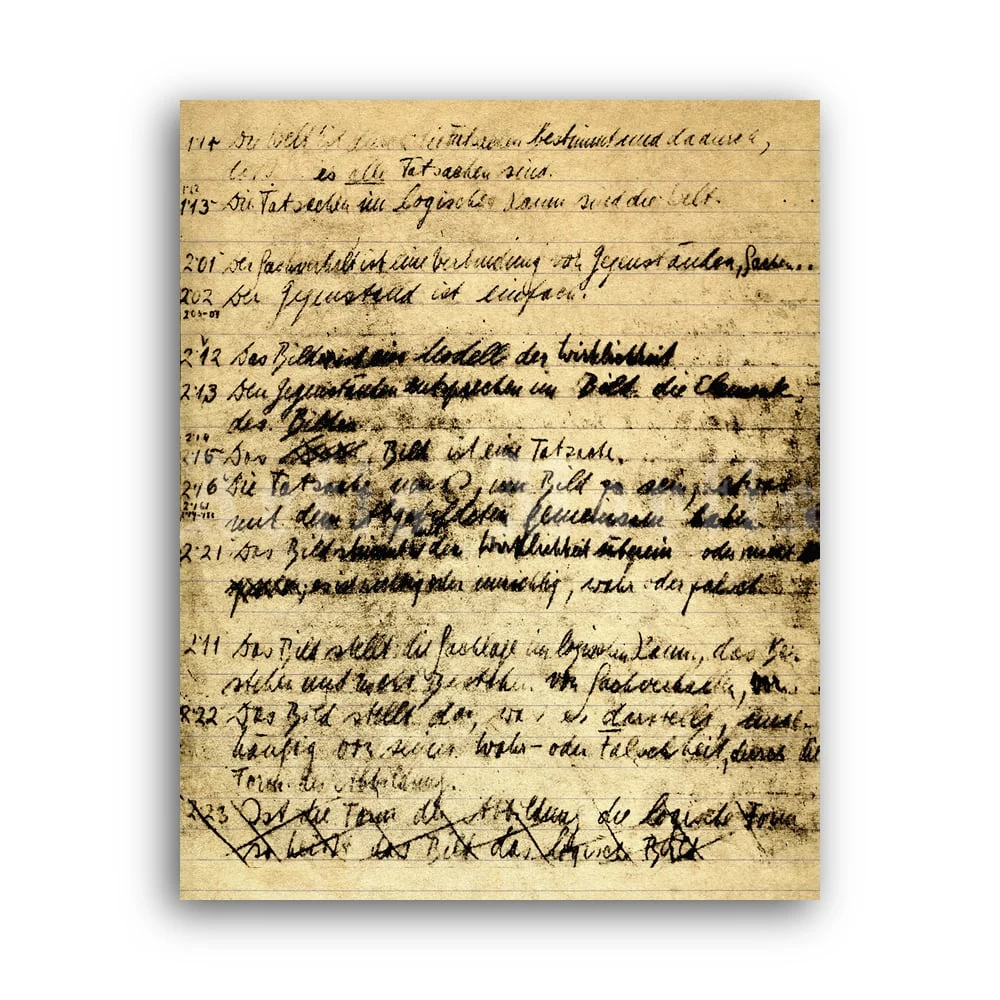
Wittgenstein’s propositions are brief, numbered and controlled. They look as if thought has been compressed into its final possible form. The work sends them through translation, where control becomes visible as something fragile.
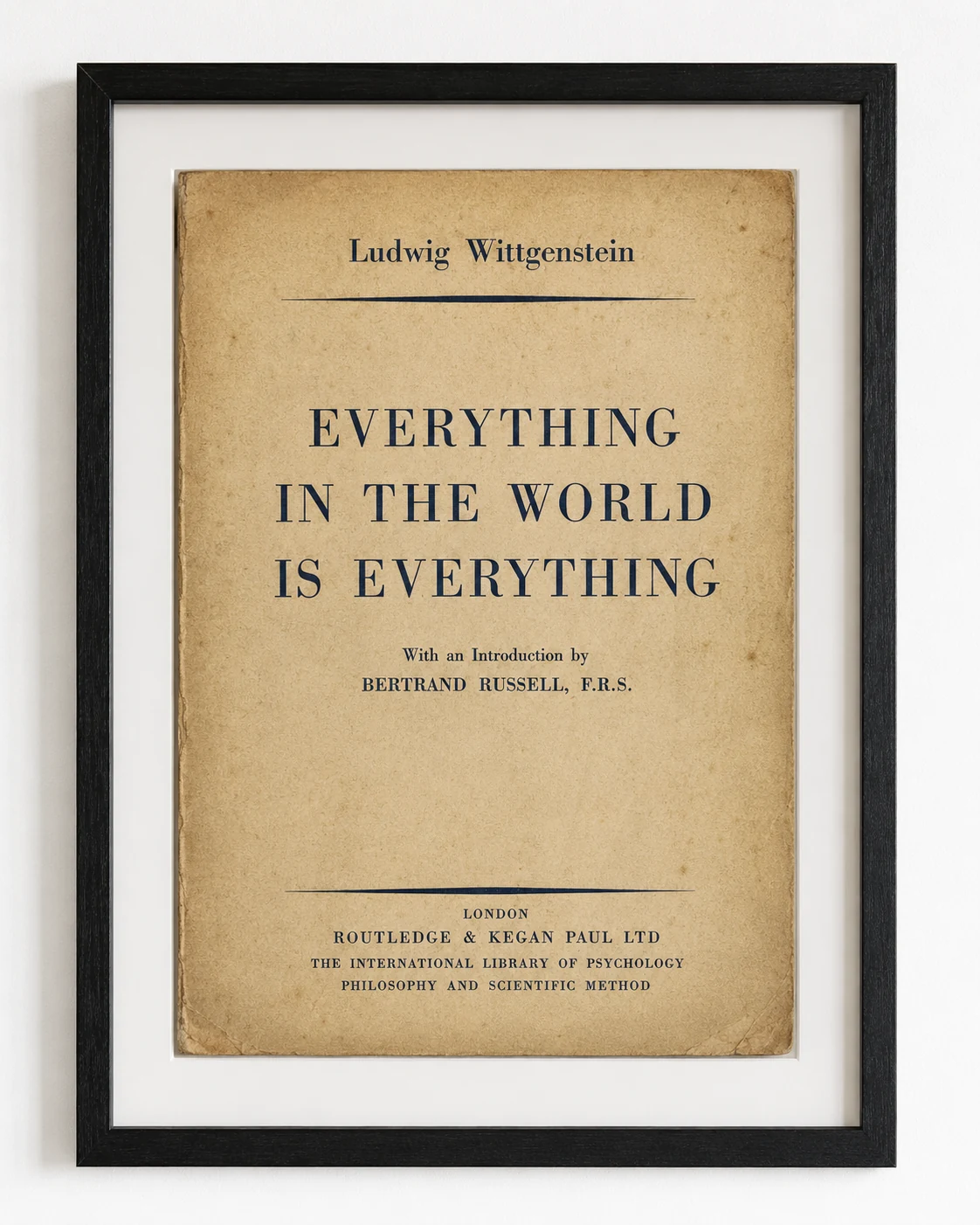
The first proposition, “The world is everything that is the case,” appears almost impossibly still. Its grammar is plain. Its claim is enormous. It feels less like a sentence than a mechanism: world, everything, case. Three words holding a system in place.
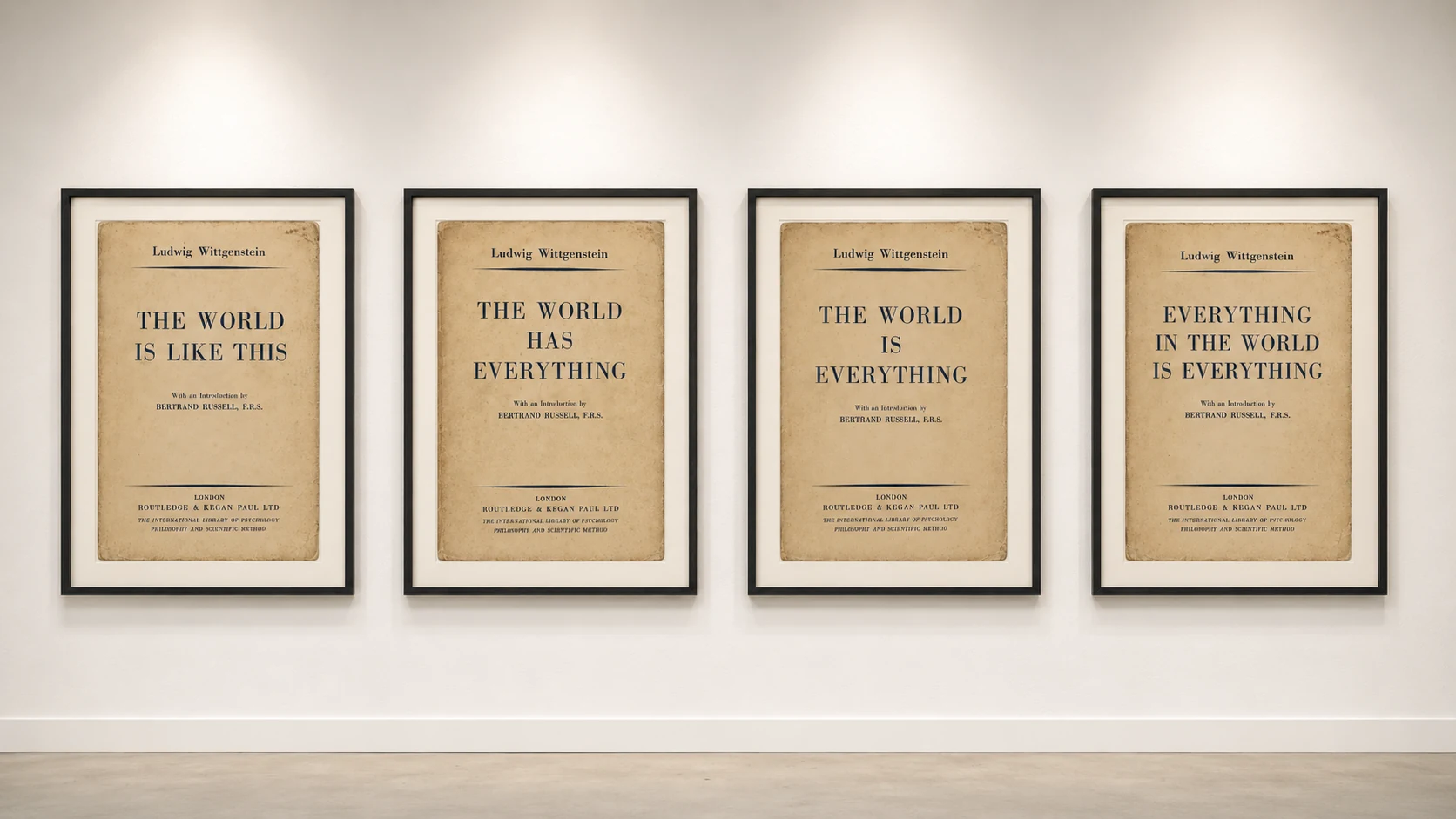
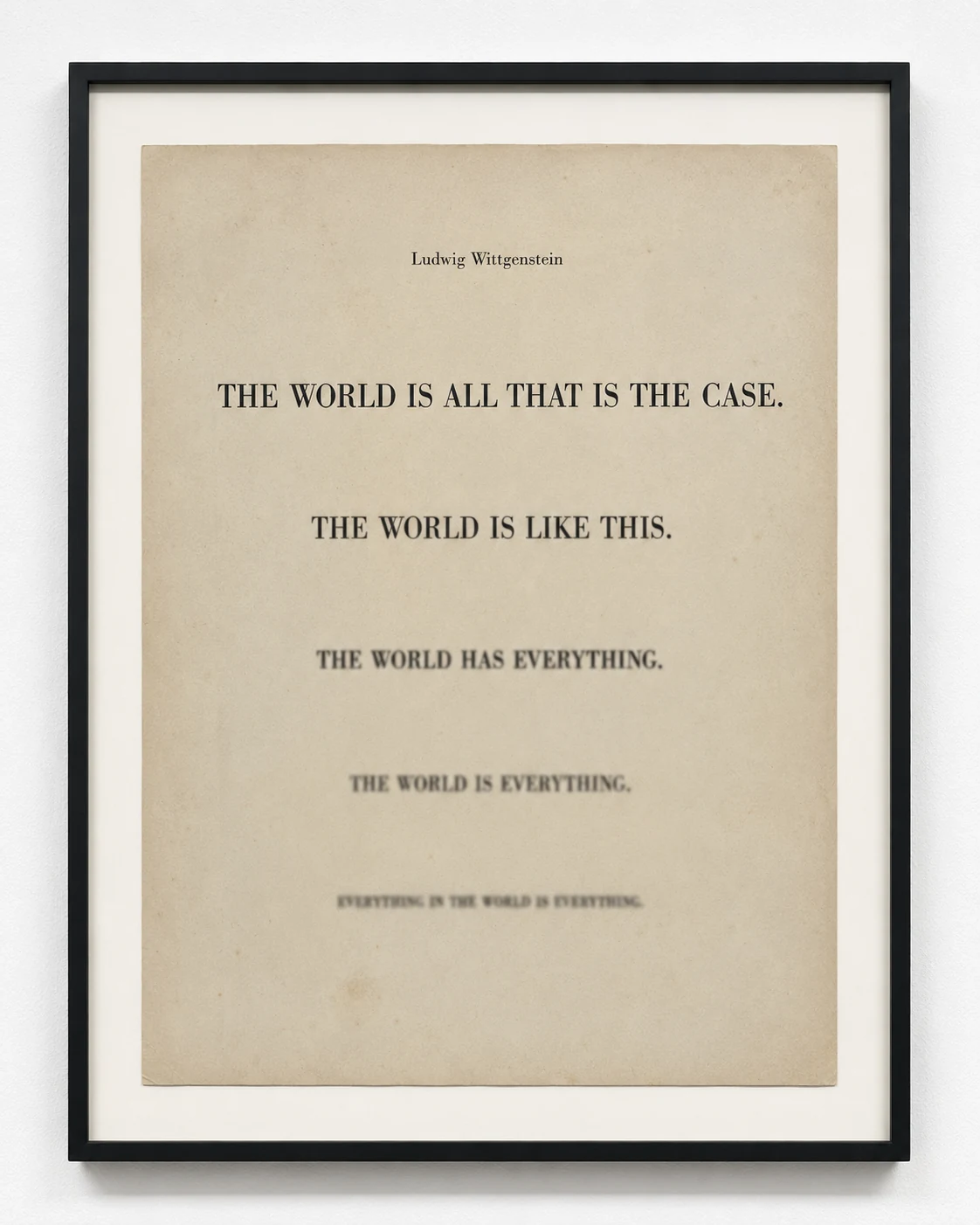
Tractatus Drift treats that stillness as material. The sentence is translated, returned, translated again and allowed to accumulate damage. Each passage through another language leaves a small mark. Sometimes the sentence remains close to itself. Sometimes it comes back with a different rhythm, a different weight, or a faintly different world.
The work studies what transfer does. A proposition may survive as grammar while shifting as pressure. It may still be readable and already be elsewhere.
Translation usually promises access. Here it becomes a test of philosophical form. The sentence moves through French, Arabic, Chinese, Japanese, Hebrew, Hindi and other routes. Each language carries the statement with its own syntax, cadence and inherited assumptions. The return to English is never a clean return to origin. It is a new English sentence carrying the pressure of the route.
This is where the work turns Wittgenstein’s severity into a material event. The propositions were written with an extreme desire for order. They are sharp, almost architectural. In the translation loop, that architecture remains visible, but its edges begin to soften. Precision becomes something that has to be produced again, not something that simply remains.
The sentence wants to hold the world in place. The machine shows that the sentence itself is movable.
The drift is deliberately small. The sentence is not destroyed. It does not collapse into nonsense. Its authority changes by degrees. A word shifts, a rhythm changes, an emphasis moves. The philosophical object remains recognizable long enough for the damage to matter.
That narrow zone is the subject of the work: still legible, no longer identical.
Tractatus Drift can be shown as a website, a projection, a print sequence or an installation. In each form, the proposition becomes a routed object. The route is not secondary metadata. The route becomes part of the sentence’s identity.
Method
A proposition from the Tractatus is translated into another language and then returned to English. The returned sentence becomes the next source. Over time, the work records the accumulation of drift.
Drift
Drift appears when the sentence remains recognizable while its force changes. The work focuses on that unstable middle state, where meaning survives transfer but loses its original pressure.
Material
The material is language under repeated transfer: syntax, rhythm, emphasis, residue, error and return. Translation becomes a visible pressure placed on philosophical compression.
Output
- single-channel website
- projected language work
- print series of translation routes
- essay on compression and transfer