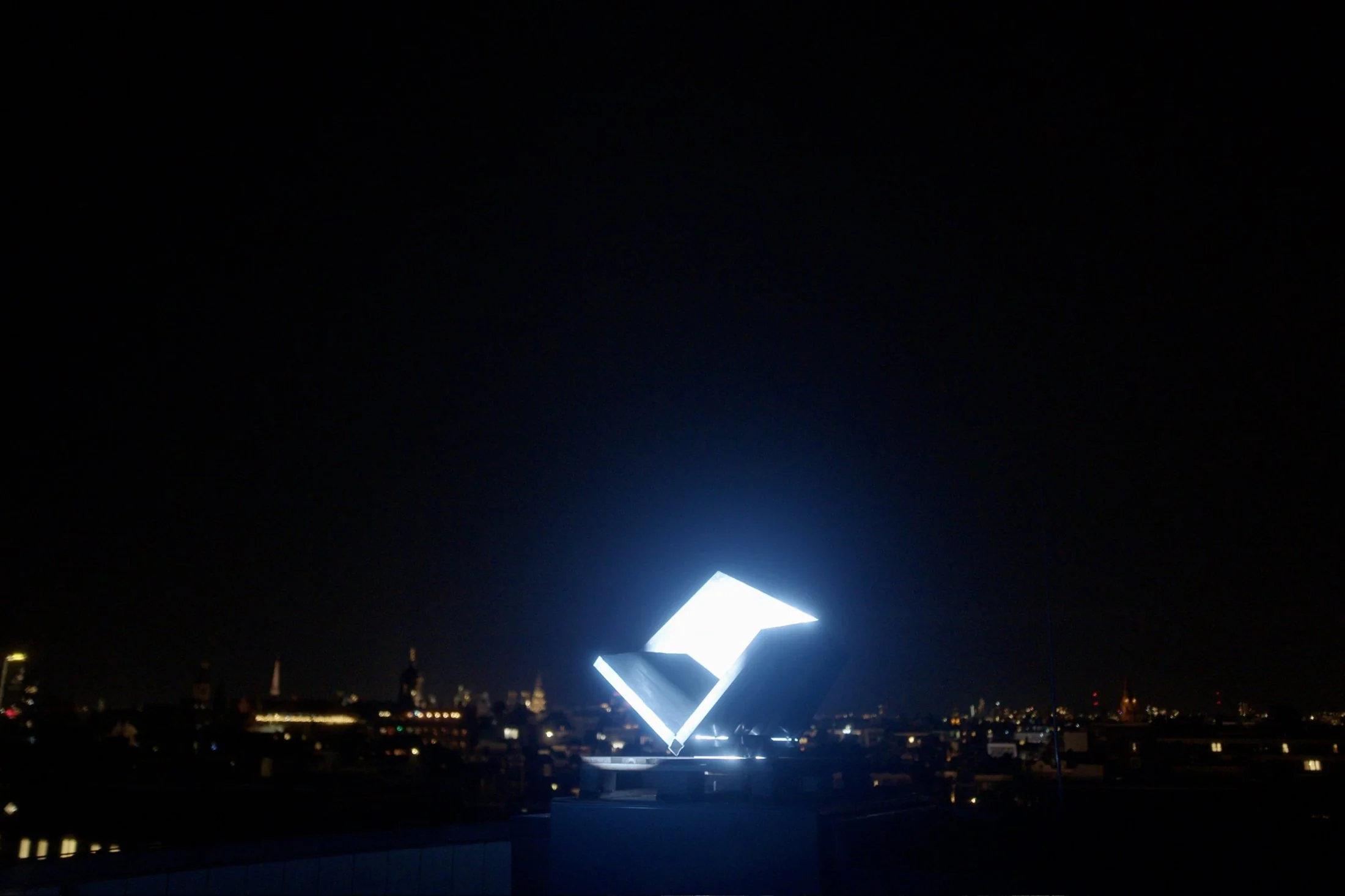
What if Amsterdam itself could be used as a synthesizer?
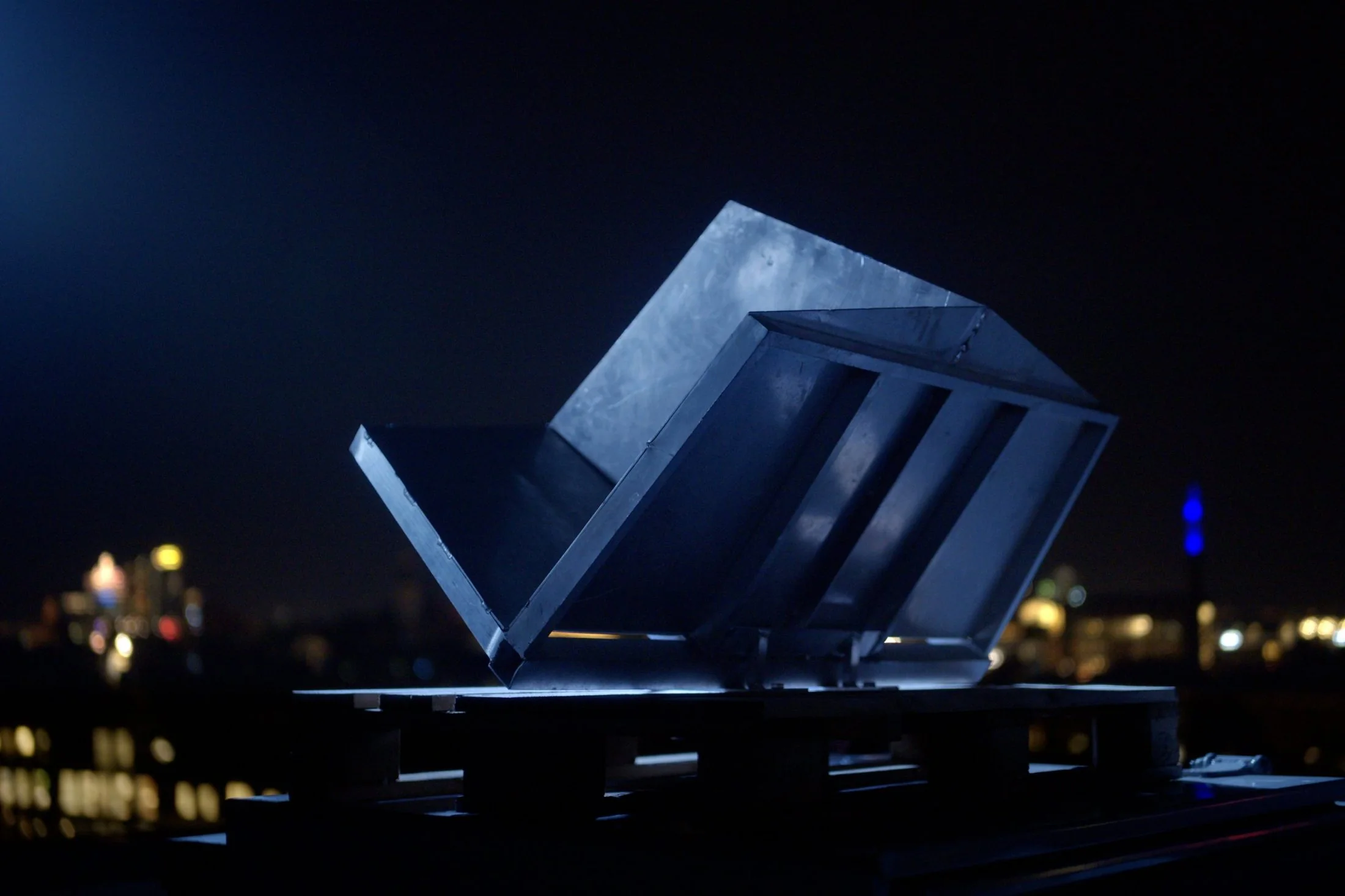
For the 30th anniversary of Amsterdam Dance Event, Bob de Jong placed radar reflectors on two iconic Amsterdam rooftops and physically changed the way satellites observe the city. When a radar satellite passes overhead, the aluminium structures bounce its signal straight back. The rooftops become part of the observation itself.
Satellites usually look at the Earth without us noticing. Beat of the City reverses that relationship. Rather than working only with existing satellite imagery, the work intervenes in what the satellites see. The recurring echoes become the electronic heartbeat of the city.
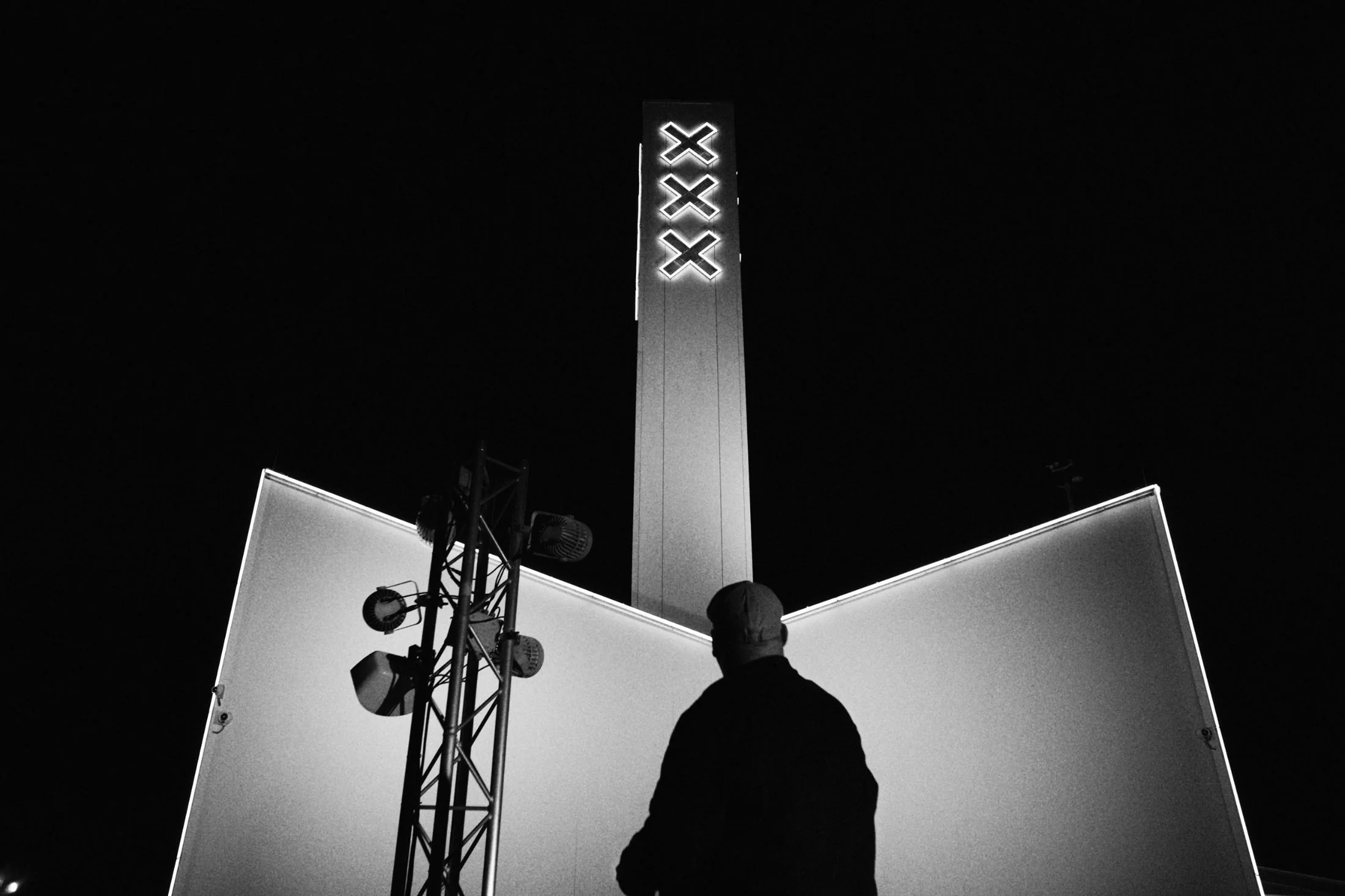
The two sites connect different eras. More than two centuries ago, the sky was studied from the eighteenth-century observatory of Felix Meritis. Across the IJ, A’DAM Tower stands as a contemporary symbol of electronic music culture. Today, the satellites look back at both.
method
The project uses the European Sentinel-1 satellites, which observe the Earth’s surface with Synthetic Aperture Radar (SAR). Radar needs no daylight: microwaves pass through cloud and reach the city at night. Canals appear dark, because smooth water reflects the signal away; buildings light up. The reflectors locally amplify the return towards the satellite, creating recognisable signals in the data. With the Netherlands Space Agency and Earth Intelligence company Terramira, these observations were processed into material for the film.
rhythm
The satellites follow their own orbit and return over Amsterdam on a fixed observation cycle. Every pass is a new exchange between radar from space and metal on the rooftops. Two rhythms meet in the composition: that of satellites in orbit, and that of Amsterdam as a city of electronic music.
voices
“A satellite that keeps coming back shows us the Earth in motion. Not only how a place changes over time, but also how that place is connected to the rest of the planet. Beat of the City captures that unique perspective beautifully.”
Liv Toonen, satellite expert, Netherlands Space Agency
“Beat of the City shows that the same observations also have a rhythm. To us, that is the essence of Earth Intelligence: translating data from space so that everyone can see what is happening on Earth.”
Reinier Oost, Earth Intelligence Lead, Terramira
output
- radar reflector installations on A’DAM Tower and Felix Meritis
- single-channel film, 1:33
- public viewing of the reflector at A’DAM Lookout during ADE 2026
“By placing radar reflectors on the rooftops, we change what the satellites observe. We take those signals and transform them into the heartbeat of the city.”
Bob de Jong
credits
- artist
- Bob de Jongconcept, installation and film
- occasion
- Amsterdam Dance Event30th anniversary edition, 2026
- in collaboration with
- Netherlands Space Agency (NLSA)Liv Toonen · Jasper Wamsteker
- TerramiraReinier Oost
- with
- A’DAM Lookout · Shelter Night Gallery
- locations
- A’DAM Tower · Felix MeritisAmsterdam
- satellite data
- Copernicus Sentinel-1Contains modified Copernicus Sentinel data (2026)